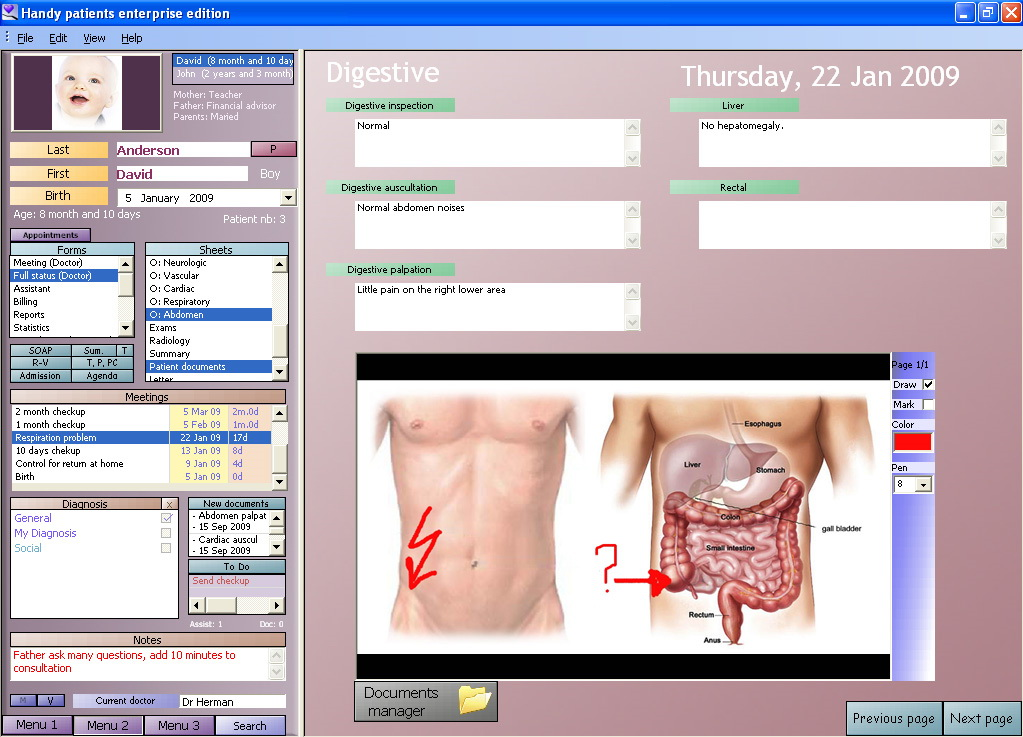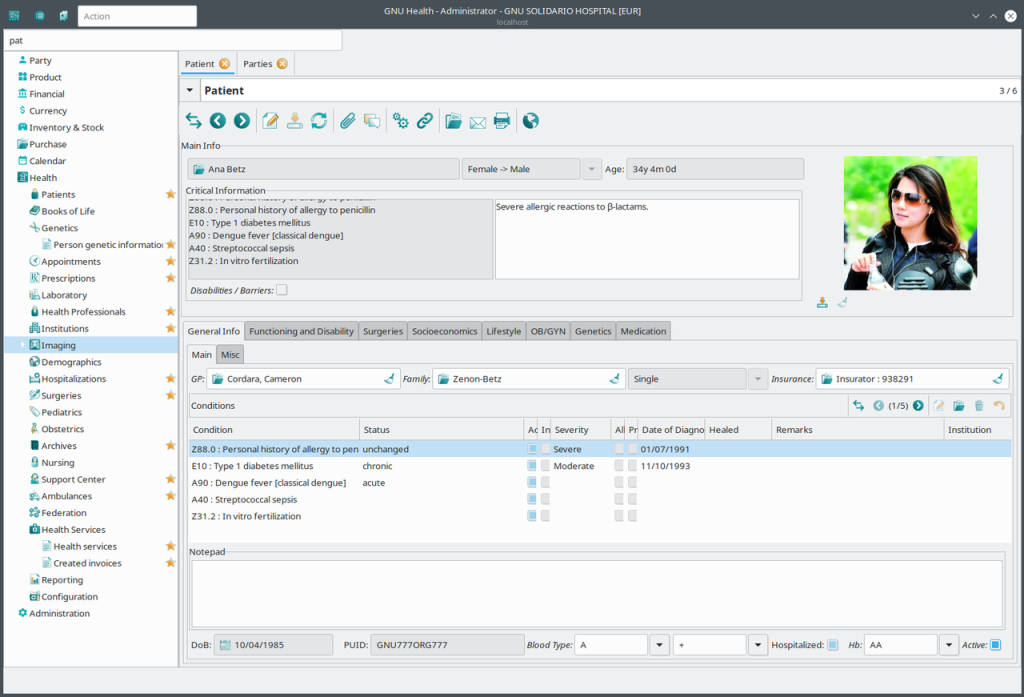
A personal health record (PHR) is a health record where health data and other information related to the care of a patient is maintained by the patient.[1] This stands in contrast to the more widely used electronic medical record, which is operated by institutions (such as hospitals) and contains data entered by clinicians (such as billing data) to support insurance claims. The intention of a PHR is to provide a complete and accurate summary of an individual’s medical history which is accessible online. The health data on a PHR might include patient-reported outcome data, lab results, and data from devices such as wireless electronic weighing scales or (collected passively) from a smartphone.
Web applications
[edit]
Web-based PHR solutions are essentially the same as electronic device PHR solutions, however, web-based solutions have the advantage of being easily integrated with other services. For example, some solutions allow for import of medical data from external sources. Solutions including HealthVault, and PatientsLikeMe allow data to be shared with other applications or specific people. Mobile solutions often integrate themselves with web solutions and use the web-based solution as the platform.
A large number of companies have emerged to provide consumers the opportunity to develop online PHRs. Some have been developed by non-profit organizations, while others have been developed by commercial ventures. These web-based applications allow users to directly enter their information such as diagnosis, medications, laboratory tests, immunizations and other data associated with their health. They generate records that can be displayed for review or transmitted to authorized receivers.
Despite the need for PHRs and the availability of various online PHR providers, there has not been wide adoption of PHR services. E.g. Google discontinued its PHR service called Google Health on January 12, 2012. The reason cited for shutting down Google Health was that the service did not translate from its limited usage into widespread usage in the daily health routines of millions of people.[23][24] Surveys of web-based services have found wide variations in functions between services and only limited data on efficacy and safety concerns.[25][26][27][28] One analyst, describing the public’s reluctance to adopt the services, called PHRs “a technology in search of a market.”[24]
An emerging standard from HL7, Fast Healthcare Interoperability Resources (FHIR), is designed to make it easier for developers of personal health record applications to access relevant medical records.[29]